

Cranial Sacral Therapy: A Gentle, Whole-Body Approach to Healing and Reconnection
When Something Feels Off…
But You Can’t Quite Explain Why
Have you ever felt like your body just isn’t quite right… but you can’t put your finger on why?
You might feel tense but not injured. Exhausted but unable to switch off. Overwhelmed, yet oddly disconnected from yourself at the same time.
This is something I hear a lot in clinic, especially from women who are juggling a lot — work, family, expectations, and everything in between.
Often, nothing shows up clearly on scans. There’s no single “problem” to fix. But your body is still trying to tell you something.
This is where Cranial Sacral therapy can be incredibly powerful.
It’s not forceful. It’s not invasive. And it doesn’t try to “fix” your body.
Instead, it works with your nervous system, helping your body feel safe enough to release tension, reset, and begin healing in its own way.
In this guide, I’ll walk you through exactly what Cranial Sacral therapy is, how it works, what to expect, and whether it might be the right fit for you.

Cranial Sacral Therapy At a Glance
- Gentle, light-touch therapy (no force or manipulation)
- Works with your nervous system to reduce stress and tension
- Helps your body shift into a calmer “rest and repair” state
- Often supports sleep, pain, and overall wellbeing
- Can be used alongside physiotherapy and women’s health care
Already curious about what happens during the assessment? Jump to What Happens During a Cranial Sacral Therapy Assessment?
What Is Cranial Sacral Therapy?
Cranial Sacral therapy (often shortened to CST) is a gentle, hands-on treatment that works with the body’s natural rhythms and the nervous system.
It focuses on what’s known as the cranial-sacral system — which includes:
- The brain and spinal cord
- The membranes and fluid surrounding them
- The connective tissue (fascia) throughout the body
Rather than using pressure or manipulation, Cranial Sacral therapy uses very light touch — often no more than the weight of a coin — to assess and release areas of tension.
A simple way to think about it
If your body were like a web, Cranial Sacral therapy helps gently untangle the knots — without pulling or forcing.
It’s subtle, but often deeply effective.
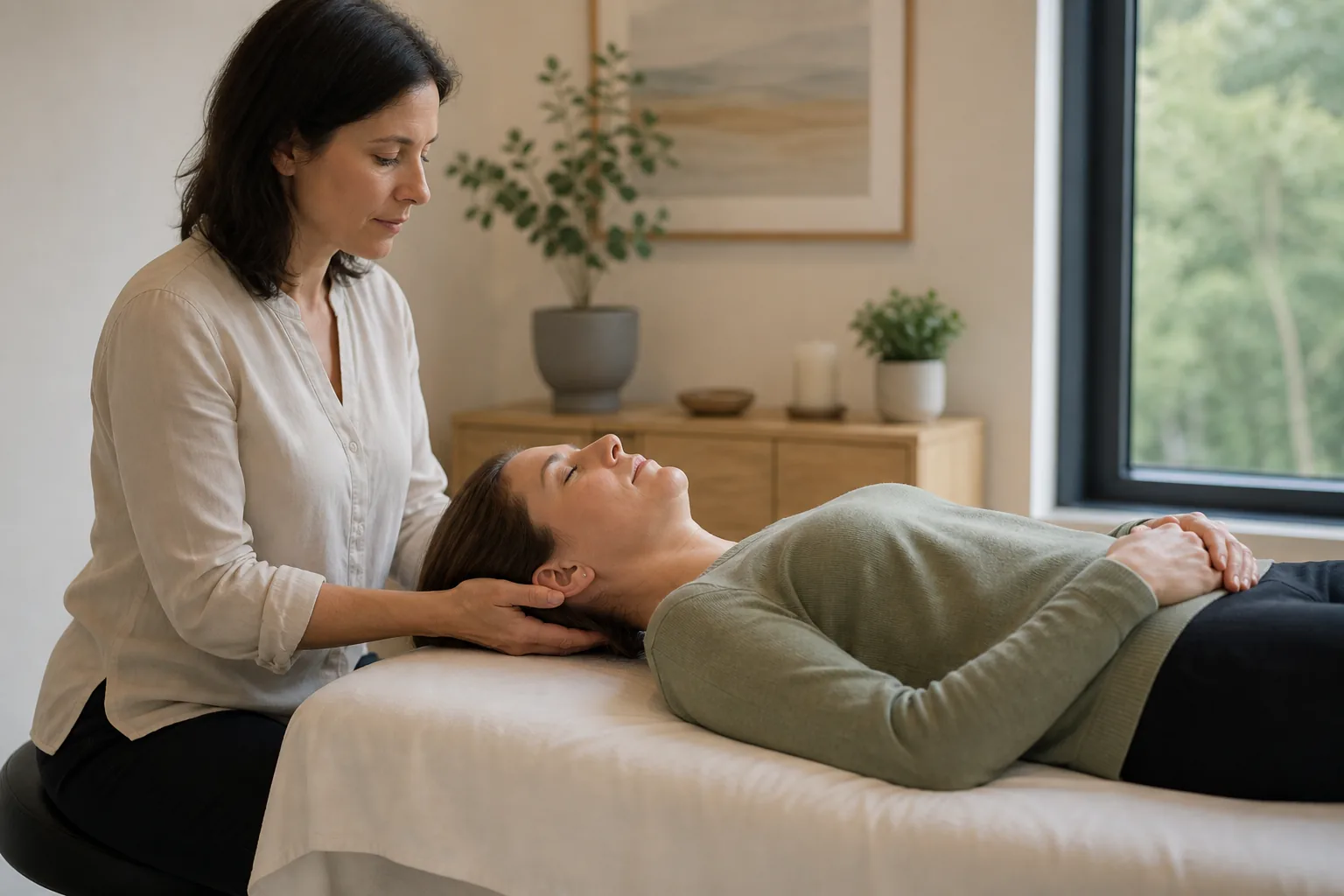
Pro Tip:
Think of your nervous system like a dimmer switch, not an on/off button.
CST helps gently turn the intensity down — rather than forcing it off.
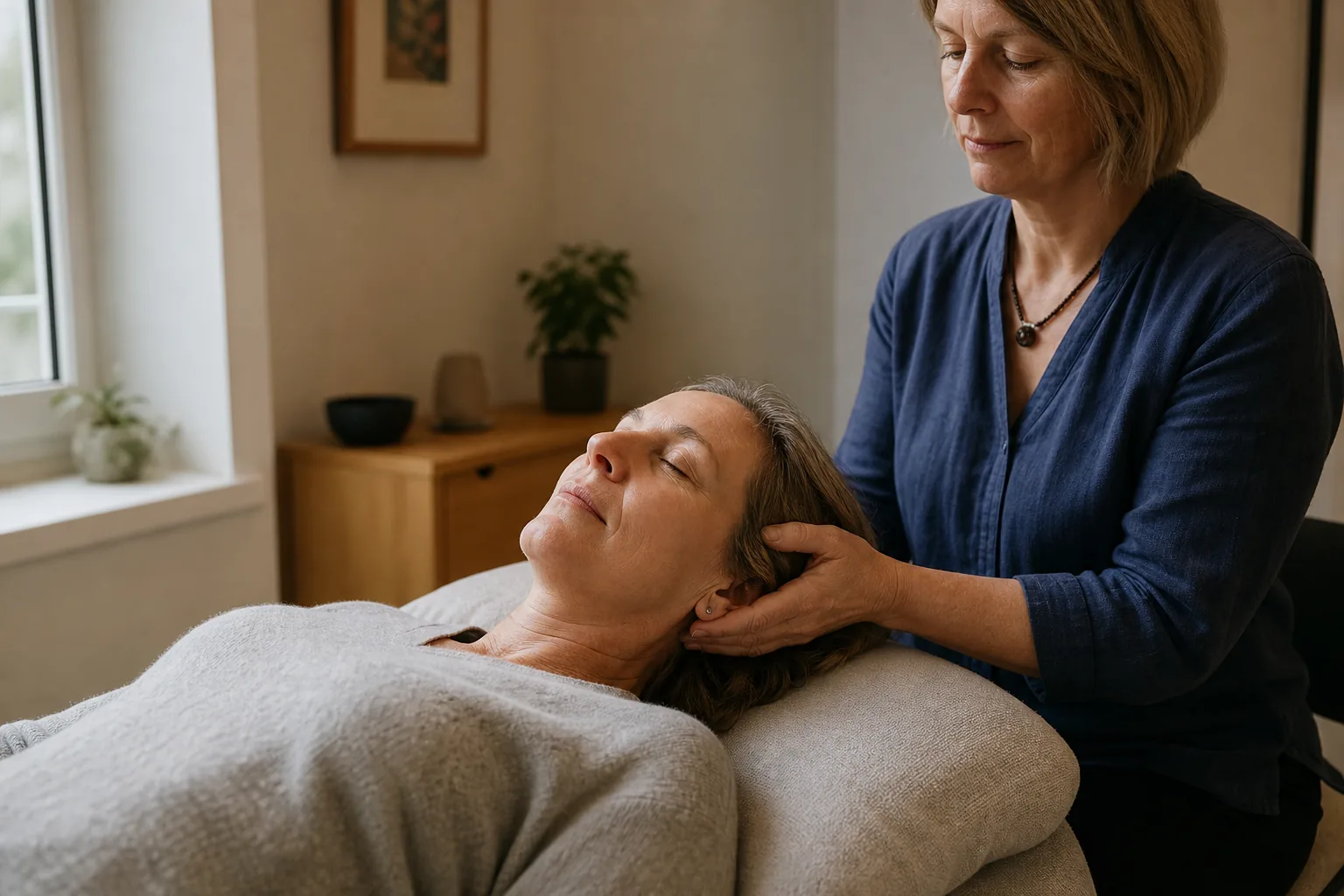
Myth-Busting:
“Cranial Sacral therapy is too gentle to do anything.”
Gentle doesn’t mean ineffective. Cranial Sacral therapy works with your nervous system — and your nervous system responds best to safety, not force.
When your body feels safe, it’s far more willing to release tension and reset. That’s where the real change happens.
How Does Cranial Sacral Therapy Work?
This is one of the most common questions I get — and understandably so.
Because Cranial Sacral therapy looks very different from traditional treatments.
Your nervous system is the key
At the heart of Cranial Sacral therapy is your nervous system.
When you feel stressed, overwhelmed, or under pressure, your body shifts into a protective state — often called “fight or flight.”
This is helpful in short bursts.
But many of us spend far too long in this state.
Over time, this can lead to:
- Muscle tension
- Poor sleep
- Digestive issues
- Hormonal disruption
- A sense of being constantly “on edge”
Cranial Sacral therapy works by helping your body shift out of this state and into a calmer, more regulated mode — often referred to as “rest and digest.”
Fascia and stored tension
Your body is held together by a network of connective tissue called fascia.
When you experience stress, injury, or emotional strain, this tissue can become tight or restricted.
Cranial Sacral therapy helps release these restrictions — not by pushing into them, but by allowing the body to unwind naturally.
What Happens During a Cranial Sacral Therapy Session?
If you’ve never experienced Cranial Sacral therapy before, it can feel a little unfamiliar.
Let me walk you through it.
1. A relaxed conversation
We start by talking.
Not just about your symptoms, but about you — your lifestyle, stress levels, sleep, and how things have been feeling overall.
This helps build a full picture of what your body might be dealing with.
2. Gentle assessment
You’ll lie fully clothed on a treatment couch.
I’ll use very light touch to assess areas of tension or restriction in your body.
This might include your:
- Head
- Neck
- Spine
- Pelvis
- Diaphragm
3. The treatment itself
This is where Cranial Sacral therapy really differs from other treatments.
There’s no deep pressure. No manipulation.
Instead, I use subtle hand placements to support your body in releasing tension.
Often, it looks like very little is happening.
But internally, your body can be doing a lot.
4. Time to integrate
At the end, we give your body a moment to settle.
Sometimes we’ll discuss what you noticed. Sometimes it’s just about allowing you to come back to the room gently.
Mini-Guide:
How to Get the Most Out of Your Cranial Sacral Therapy Session
If you’ve never had Cranial Sacral therapy before, it can feel a little unfamiliar. These simple tips will help you feel more comfortable—and get the most from your session.
- Come as you are
You don’t need to prepare, perform, or “do it right.” Your body already knows what it needs. - Wear something comfortable
Soft, loose clothing helps your body relax more easily and allows you to fully switch off. - Let go of trying to figure it out
It’s tempting to analyse what’s happening—but the more you can simply rest and allow, the more your body can respond. - Notice the subtle changes afterwards
The real shifts often happen after your session—better sleep, feeling calmer, or less tension without really knowing why. - Give your body time and space
Cranial Sacral therapy isn’t about quick fixes. It’s about gently supporting your body over time, so changes build in a way that lasts.
What Does Cranial Sacral Therapy Feel Like?
This is one of the biggest unknowns for people considering Cranial Sacral therapy.
And the honest answer is: it varies.
Common experiences include:
- A deep sense of relaxation
- Feeling very still or quiet mentally
- Warmth or gentle pulsing sensations
- Emotional release (unexpected but completely normal)
- Falling asleep
Some people feel very clear shifts during the session.
Others notice changes afterwards — better sleep, reduced tension, or feeling more like themselves again.
Reassurance
There is no “right” way to experience Cranial Sacral therapy.
Your body will respond in its own way, at its own pace.

Pro Tip:
If you can, keep the rest of your day fairly calm after your session. Even small things—like a quiet walk or an early night—can help your body integrate the changes more deeply.
Who Is Cranial Sacral Therapy For?
Cranial Sacral therapy is particularly helpful for people who feel like something is “off”… but haven’t found answers elsewhere.
In clinic, I often see people who are:
- Constantly busy and mentally overloaded
- Struggling to switch off or relax
- Feeling disconnected from their body
- Experiencing ongoing tension without a clear cause
Especially relevant if you:
- Feel tired but wired
- Carry a lot of responsibility (at work or home)
- Have been dealing with long-term stress
- Are in a recovery phase (postnatal, burnout, life changes)
What Can Cranial Sacral Therapy Help With?
Cranial Sacral therapy supports the body as a whole — so its benefits often span multiple areas.
Physical Symptoms
- Headaches and migraines
- Neck and shoulder tension
- Jaw pain (TMJ)
- Chronic fatigue
- Digestive discomfort
Nervous system-related issues
- Anxiety and overwhelm
- Poor sleep
- Burnout
- Sensory overload
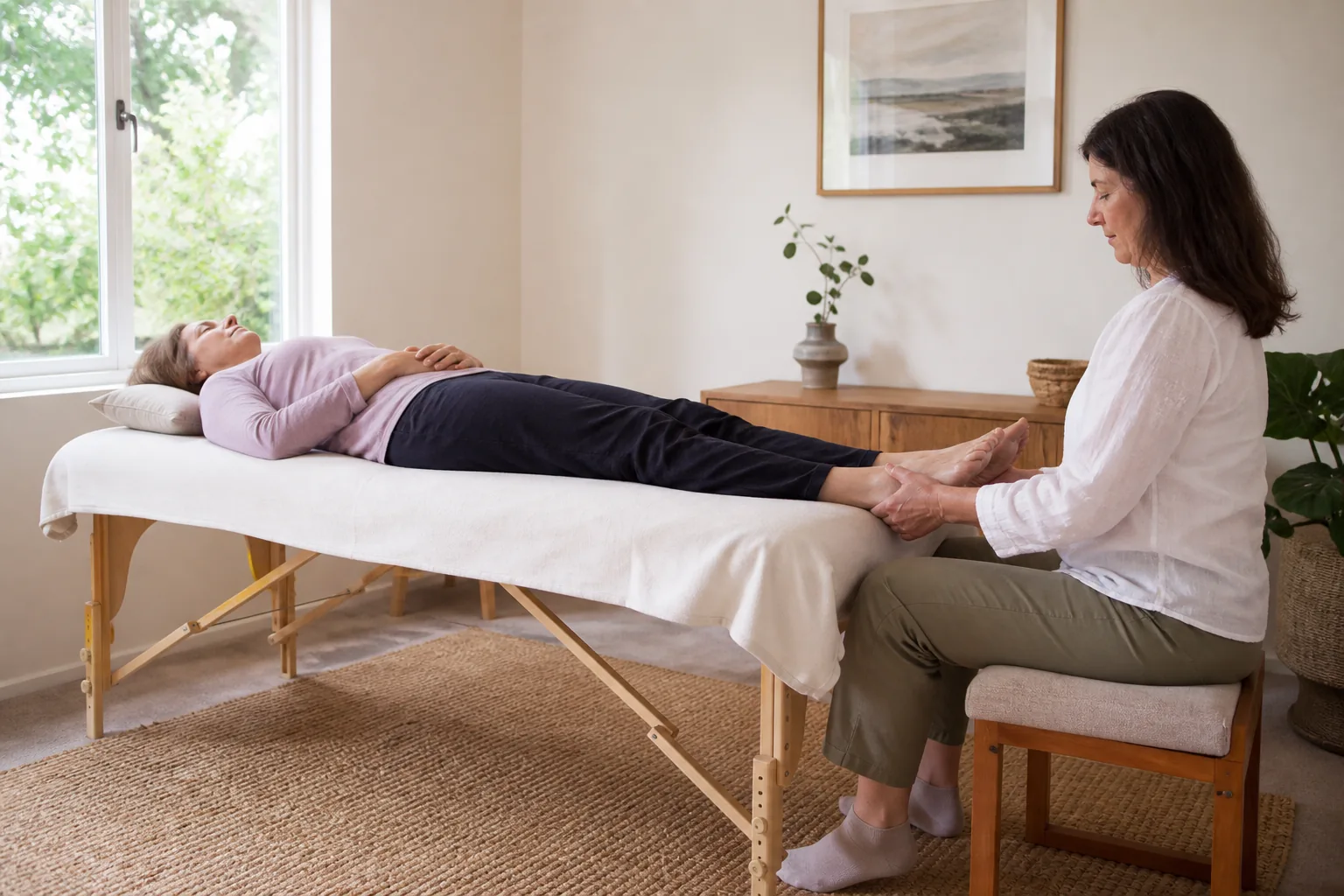
Women’s health support
- Hormonal imbalance symptoms
- Jaw pain (TMJ)
- Postnatal recovery
- Pelvic tension patterns
Emotional wellbeing
- Feeling disconnected or numb
- Difficulty relaxing
- Stored stress or emotional tension
The Nervous System Connection: Why This Therapy Matters
Many of the symptoms above have one thing in common — the nervous system.
When your body doesn’t feel safe, it holds tension.
It stays alert.
It struggles to rest, digest, and repair.
Cranial Sacral therapy helps create the conditions for your body to feel safe again.
And when that happens, things often begin to shift.
Cranial Sacral Therapy...
... for Stress, Burnout and Overwhelm
If you’re someone who is always “on”… this section is for you.
Modern life asks a lot of us.
And for many women, that includes:
- Managing a household
- Supporting others emotionally
- Balancing work and family life
- Rarely getting time to fully switch off
Over time, this builds. And eventually, your body starts to show it.
Cranial Sacral therapy gives your system a rare opportunity:
To pause. To breathe. To reset.
... and Women’s Health
Women’s bodies are incredibly responsive to stress.
Hormones, the nervous system, and physical tension are all closely linked.
When one is out of balance, it often affects the others.
Cranial Sacral therapy can support this by:
- Calming the nervous system
- Reducing overall tension
- Supporting recovery after pregnancy
It’s not a replacement for physiotherapy or medical care — but it can be a powerful complement.
Assessment: What Practitioners Are Looking For
In Cranial Sacral therapy, we’re not just looking at where it hurts.
We’re looking at patterns.
How your body moves.
Where it holds.
Where it compensates.
It’s a whole-body approach — because the body works as a whole.
Why Gentle Treatment Can Be So Effective
It’s easy to assume that stronger treatment equals better results.
But that’s not always true.
Especially when the nervous system is involved.
If your body feels pushed or overwhelmed, it often resists change.
But when it feels safe?
It softens.
And that’s where real change can happen.
How Many Sessions Will You Need?
This depends on the individual.
Some people feel a shift after just one session.
Others benefit from a short course of treatment.
A typical approach might look like:
3–6 initial sessions
Followed by more spaced-out appointments
The goal isn’t dependency.
It’s helping your body become more resilient over time.
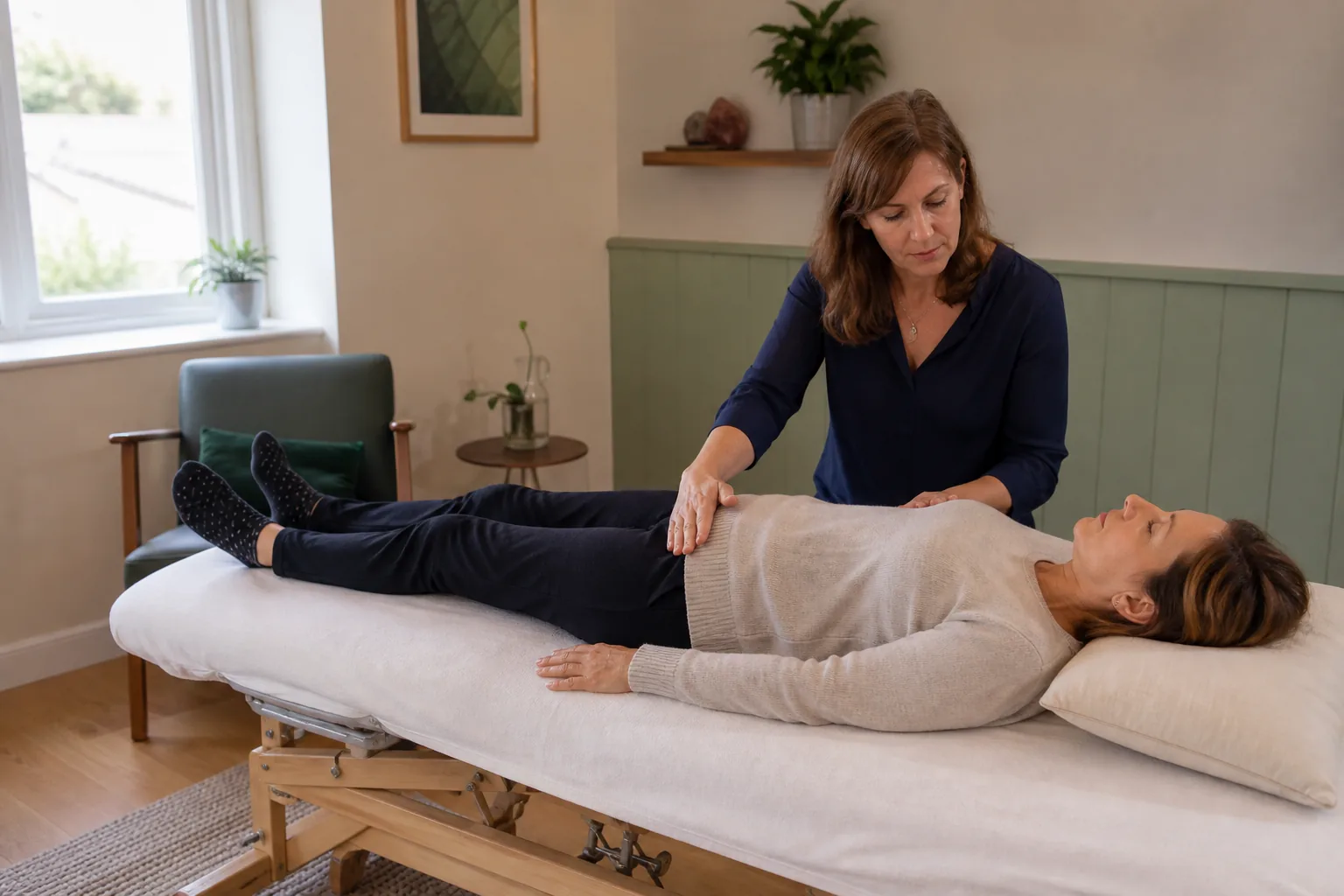
A Real-Life Example
One patient came to see me feeling constantly tense, exhausted, and unable to switch off.
She’d tried massage, rest, even time off work — but nothing really shifted.
After a few Cranial Sacral therapy sessions, she started sleeping better.
Her shoulders relaxed.
And most importantly, she said:
“I feel like myself again.”
Is Cranial Sacral Therapy Safe?
Yes — Cranial Sacral therapy is extremely gentle and generally very safe.
It’s suitable for a wide range of people, including those who may not tolerate more hands-on treatments.
As with any therapy, we’ll always ensure it’s appropriate for you before starting.
CST vs Other Treatments
Cranial Sacral therapy is different from many other therapies.
It doesn’t focus on force, strength, or correction.
Instead, it focuses on regulation, release, and balance.
This makes it particularly helpful when symptoms are complex, long-standing, or stress-related.
What Results Can You Expect?
Results from Cranial Sacral therapy tend to build over time.
Short-term
- Feeling calmer
- Better sleep
- Reduced tension
Medium-term
- Improved resilience to stress
- Fewer flare-ups
Long-term
- A stronger connection to your body
- Greater sense of balance and wellbeing
Common Questions About Cranial Sacral Therapy
Q: Does Cranial Sacral therapy really work if it’s so gentle?
A: Yes — because it works with the nervous system, not against it.
Q: Will I feel anything?
A: You might. Or you might not. Both are completely normal.
Q: Is it suitable after having children?
A: Yes — it can be very supportive during postnatal recovery.
Q: Can it be combined with physiotherapy?
A: Absolutely. In fact, they often complement each other very well.
When Cranial Sacral Therapy Might Not Be the First Step
If you have an acute injury or need structured rehabilitation, physiotherapy may be the best place to start.
Cranial Sacral therapy works best as part of a broader, holistic approach.
Key Takeaway:
Cranial Sacral therapy isn’t about fixing you.
It’s about helping your body feel safe enough to do what it already knows how to do.
A Gentle Next Step
If this resonates with you, you don’t need to decide anything right now.
But if you’re curious, we can explore whether Cranial Sacral therapy might be a good fit for you.
No pressure. Just a conversation.<>/p>
You May Also Like...
Havening: A Complete Guide to Gentle, Science-Backed Emotional Healing
Havening: A Complete Guide to Gentle, Science-Backed Emotional Healing Havening Therapy for When You’re Holding It All Together… But Inside You Feel Overwhelmed If you’ve found yourself searching for Havening, you’re probably not just curious. You might be feeling...

Physiotherapy: The Ultimate Guide to Musculoskeletal (MSK) Physiotherapy
Physiotherapy: The Ultimate Guide to Musculoskeletal (MSK) Physiotherapy You’ve probably noticed it creeping in gradually — the ache in your lower back after a long day at your desk, the stiffness in your knees when you stand up from the car, or the shoulder pain that...

Psych K®: A Complete Guide to Subconscious Belief Change, Stress, and Emotional Wellbeing
Psych K® is a gentle approach to working with subconscious beliefs that influence stress, emotional patterns, and the nervous system. This guide explains what Psych K is, how it works, and whether it may be right for you.
0 Comments