
Lost Yourself in Motherhood?
5 Powerful Ways to Reconnect With You

Loneliness & Disconnection for Women and Parents in the UK, 4-Part Blog Series
Part 1: Understanding Loneliness and Disconnection: Why It Matters More Than Ever
Part 2: Disconnection and Ways to Reconnect
Part 3: The Impacts of Loneliness and Disconnection on Health
Part 4: Disconnection and Loneliness Within Relationships - What to Do About It
Part 2: Disconnection and Ways to Reconnect
Today, we’re diving deeper into disconnection and, importantly, how to begin reconnecting again. This is especially important if you’re a woman or a parent of young children, where societal pressures, family dynamics, and limited community support structures can exacerbate feelings of isolation.
The Disconnection Epidemic
Let’s begin by acknowledging something crucial: disconnection and loneliness are not flaws in your personality. They are often byproducts of how society functions and how we’ve been conditioned to move through the world. In the UK, nearly half of adults feel lonely occasionally or often (Campaign to End Loneliness, 2024). For women, especially those caring for young children, that number is even higher.
Here are a few reasons why disconnection is so common for this demographic:
- Loss of identity in parenthood: Becoming a parent can be an incredibly rewarding experience, but it can also mean a shift in how you see yourself. When your focus is constantly on someone else’s needs, it’s easy to lose sight of who you are.
- Physical and emotional exhaustion: Sleep deprivation, managing a household, trying to maintain a job, or navigating maternity leave all take a toll. When you’re exhausted, connection becomes harder to achieve or prioritise.
- Societal expectations: In the UK, there’s still an unspoken cultural narrative that not only should mothers “just get on with it” and not complain, but also live-up to the crippling “good girl” persona, where we must never speak-up or rock the boat. These only fuel disconnection and isolation.
- Lack of accessible support: While some communities offer good postnatal support or parent groups, these aren’t always accessible due to location, financial constraints, or time limitations.
All of this creates a perfect storm for feeling disconnected from yourself, your body, and the people around you.
How to Recognise When You’re Disconnected
As discussed in Part 1 , signs of disconnection can include:
- Feeling like life is happening to you, not with you
- Not recognising your reflection in the mirror
- A constant internal mental battle
- Avoiding or struggling to express emotions
- Feeling like you’re just “getting through” each day
If you relate to these, please know you’re not alone. You may be in a period of emotional and mental disconnection that, while difficult, is also completely natural given your life circumstances. The good news? There are ways back to yourself and to others.
Pathways to Reconnection
Reconnection doesn’t require a dramatic life overhaul. It starts with small, meaningful shifts that begin to gently bring you back to yourself. Let’s look at some tried-and-tested strategies, many of which I personally use, and that I share with the women and parents I work with.
1. Movement
Movement reconnects you to your physical body—a powerful antidote to numbness or overwhelm.
- Try this: Go for a short walk, stretch for five minutes, or dance around your kitchen. You don’t need a gym membership or a perfect routine. Just move.
- Why it helps: Movement releases endorphins and grounds you in the present moment. It also breaks the mental loop that often contributes to disconnection.
2. Vulnerable Conversations
Opening up to someone you trust can be transformative. It doesn’t have to be a deep dive into your entire emotional history—even just saying “I’m struggling today” can create connection.
- Try this: Call or send a voice note to a trusted friend or family member and just say how you’re feeling.
- Why it helps: Vulnerability builds emotional intimacy, which is the opposite of isolation.
3. Journaling or Voice Notes
When sharing with others feels too much, try getting your thoughts out in a private way first.
- Try this: Grab a journal and do a 5-minute brain dump, or use your phone to record how you’re feeling.
- Why it helps: Once your thoughts are out of your head and into the world, they often feel smaller and more manageable.
4. Breathwork and Meditation
You don’t need to be a yogi to benefit from breathwork or meditation. Even 3 minutes of mindful breathing can begin to regulate your nervous system.
- Try this: Search YouTube for “3-minute grounding meditation” or “breathwork for beginners.”
- Why it helps: These tools help quiet your internal noise and allow your intuitive voice to re-emerge.
5. Inner Child Work
Yes, it may sound odd to talk to your younger self, but inner child work is a powerful therapeutic approach to healing emotional wounds.
- Try this: Visualise yourself at a younger age. Tell her how old you are now, what your life looks like and remind her that she is safe. Give her any advice that would have really helped her (in retrospect) at that time in her life.
- Why it helps: Many feelings of disconnection are rooted in unhealed childhood experiences or core beliefs that no longer serve us. We do this a lot in Havening and it helps enormously.
6. Social Connection (Even When You Don’t Feel Like It)
This one can feel particularly hard when you’re in a funk, but reconnecting with others can shift your energy almost immediately.
- Try this: Text a friend for a coffee, attend a local mum group, or even join an online community.
- Why it helps: Human connection triggers the release of oxytocin, the bonding hormone, which fosters safety and trust.
Community: The Missing Piece
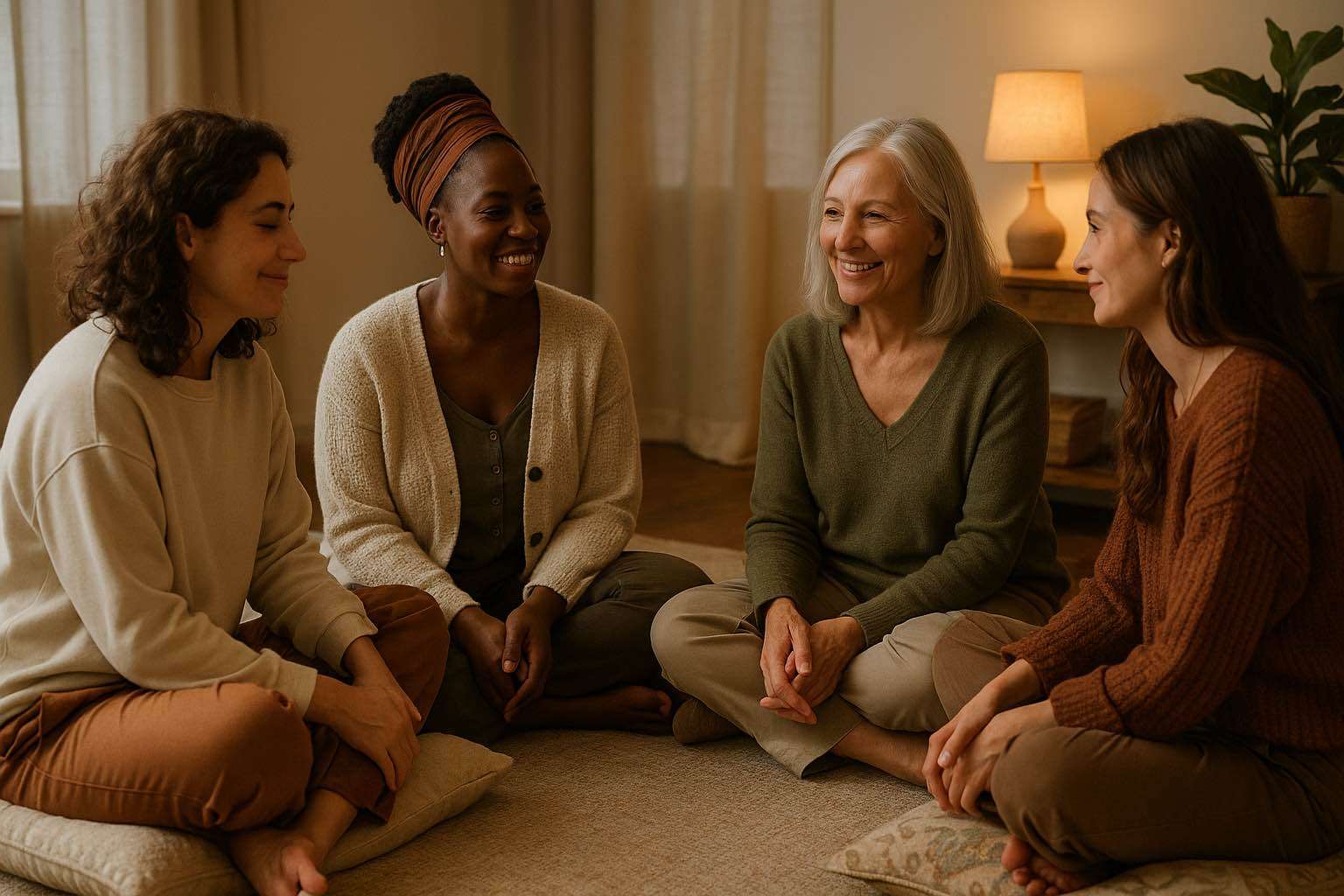
One of the most under-acknowledged sources of connection is community. In traditional societies, parenting and living were communal tasks. In modern Britain, parenting can be an incredibly isolated experience, especially for mothers. We are not meant to raise children alone or navigate life without support.
- Join a local group: Look for community centres, toddler groups, or Facebook parent communities in your area.
- Volunteer: Giving your time can boost self-worth and help you find new social networks.
- Digital communities: While social media has its downsides, curated, intentional online spaces can be deeply connecting.
Personal Reflections
As a single parent, I’ve experienced loneliness more times than I can count. The school drop-offs where everyone else seemed to have someone to chat to. The weekends alone with the kids, while friends were with their partners. The quiet evenings where the silence becomes deafening…
But I also learned to take action. I joined the school PTA, signed up to CrossFit (which became my lifeline), and told my close friends when I wasn’t okay. Most importantly, I became radically honest with myself about how I was feeling. That honesty allowed me to reclaim my voice, my space, and my sense of connection.

Give Yourself Permission
You don’t need to have it all figured out. You just need to take the next small step. Reconnection is a practice, not a destination. Be gentle with yourself and acknowledge that recognising disconnection is already a huge step forward.
If you’re ready to reconnect, try picking one of the above practices and doing it today or reach out to me for a session and we can make a plan for you.
Next in the Series: Part 3 – The Impact of Loneliness and Disconnection on Your Health
In Part 3, we’ll explore how these emotional states affect not just your mood but your physical health too – from stress and sleep to chronic conditions. We’ll also provide practical tools to start supporting your overall wellbeing.
If you haven’t already, make sure you check out Part 1 to understand the roots of disconnection. And as always, if anything in this blog has stirred something in you, know that you can reach out for support at any time. Be kind to yourself. You deserve it.
Additional Resources:
- Visit campaigntoendloneliness.org/feeling-lonely/helpful-links/ for valuable tools and support.
- Reach out for 1:1 online or in-person help via my contact page
You May Also Like…

Feel Like Flatmates, Not Lovers? How to Reconnect With Your Partner After Kids
Do you feel more like housemates than lovers? You’re not alone. Explore why relationships shift after children and how to rebuild intimacy and connection—without pretending everything’s fine. This post is a must-read for parents who feel distant.

Exhausted and Alone? Here’s Why So Many Mums Feel Burnt Out – And How to Cope
Exhausted but can’t slow down? Feeling numb but don’t know why? Learn why mums are more burnt out and lonely than ever—and how it’s impacting your health. This post will help you recognise the signs and reclaim your emotional wellbeing.

Why Do Mums Feel Lonely? The Answer Might Surprise You – And Bring You Comfort
You’re not broken—you’re just disconnected. Explore why so many mums feel lonely, even when surrounded by family. This honest, empowering post reveals the hidden truths of modern motherhood and how to begin finding yourself again.
0 Comments