

The Mummy MOT®: Your Complete Guide to Postnatal Recovery and Long-Term Wellbeing
You’ve Done the Hard Part – But Recovery Takes More Than Time
Giving birth is one of the most physically demanding, life-changing events a woman can go through. Whether your baby arrived two months ago or two years ago, your body has been through a profound transformation.
And yet, in the UK, the standard postnatal care often ends with a quick six-week GP check – sometimes lasting no more than 10 minutes.
For many women, that’s just not enough.
You might still be leaking when you sneeze, feeling an unsettling weakness in your core, or living with pain you’ve been told is “just part of being a mum.”
That’s where The Mummy MOT® comes in.
You deserve to feel supported — and it’s never too late to start your recovery journey.

The Mummy MOT® At a Glance
- Designed by specialist women’s health physiotherapists
- Suitable from 6 weeks to 3+ years postpartum
- Addresses pelvic floor, core, diastasis recti (tummy gap), posture & scar recovery
- Includes personalised rehab plan
- Available locally in Walton-on-Thames
Already curious about what happens during the assessment? Jump to What Happens During a Mummy MOT?
Why Standard Postnatal Checks Aren’t Enough — and How a Mummy MOT Fills the Gap
1. What is The Mummy MOT?
The Mummy MOT is a specialist postnatal assessment carried out by a fully trained women’s health physiotherapist. It’s not just a quick once-over – it’s a thorough, hour-long evaluation of your posture, pelvic floor, abdominal muscles, and overall movement, followed by a personalised rehabilitation plan.
Think of it as a full service for your postnatal body.
1.1 Why It’s Different From Your GP’s 6-Week Check
The standard postnatal GP check focuses primarily on your baby and general health markers like blood pressure and mood. While important, it often doesn’t:
- Assess your pelvic floor function beyond a few questions.
- Measure diastasis recti (abdominal separation).
- Assess your c-section scar.
- Analyse your posture and movement patterns.
- Provide tailored rehabilitation exercises.
The Mummy MOT® fills this gap by going far deeper – physically, functionally, and holistically
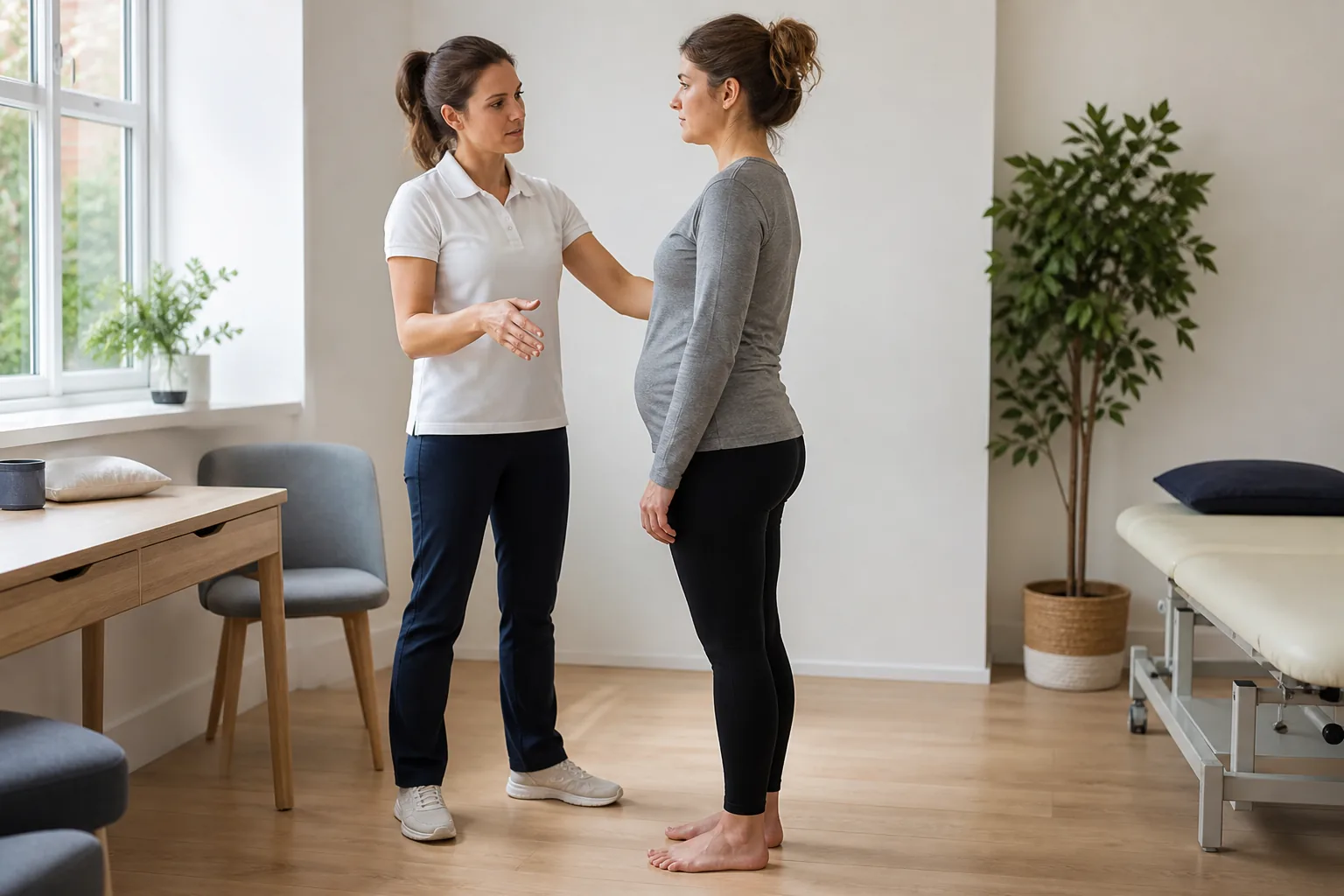
Pro Tip:
Even if you feel “mostly fine,” hidden weaknesses can cause problems months or years later. An early Mummy MOT can prevent issues before they start.

2. Who Needs a Mummy MOT?
You might think The Mummy MOT is only for women a few weeks after birth, but in reality, it can help any mother – even years down the line – if she’s experiencing ongoing postnatal symptoms.
You may benefit if you:
- Leak urine when you cough, sneeze, or run.
- Feel a gap or bulge in your tummy.
- Have persistent back, hip, or pelvic pain.
- Experience pain during intimacy.
- Struggle with core strength or balance.
- Want to return to running, gym workouts, or sport safely.
Myth-Busting:
“Leaking is just part of motherhood.”
No. It’s common, but not normal – and with the right help, it’s treatable.
3. The Postnatal Body: What Really Happens
Pregnancy and childbirth reshape your body in ways you might not expect. Understanding these changes is the first step to recovery.
3.1 Pelvic Floor Changes
Your pelvic floor muscles – the hammock of muscle supporting your bladder, bowel, and womb – are stretched during pregnancy and birth. Weakness here can lead to incontinence, pelvic organ prolapse, and discomfort.
3.2 Diastasis Recti (Abdominal Separation)
Your growing bump causes the connective tissue between your “six-pack” muscles to stretch and thin. If it doesn’t fully close after birth, you can be left with a visible bulge and a weaker core.
3.3 Postural Shifts
Carrying a baby for nine months, followed by feeding, lifting, and babywearing, can alter your spinal alignment. You may develop tightness in your chest, neck and shoulders, or develop lower back discomfort.
3.4 C-Section Scar Issues
Scar tissue can restrict movement, cause pulling sensations, and even contribute to back pain if not mobilised correctly.
Mini-Guide:
5 Signs You Could Benefit from The Mummy MOT
- Leaking urine when exercising or laughing.
- Persistent back, hip, or pelvic pain.
- Abdominal bulge or doming when sitting up.
- Painful sex.
- Difficulty returning to your pre-baby fitness level.
4. What Happens During a Mummy MOT?
If you’ve never had a women’s health physiotherapy assessment, it can be reassuring to know exactly what’s involved.
4.1 Before Your Appointment
You’ll be advised on comfortable clothing, what to bring, and reassured that everything is confidential.
4.2 Step-by-Step Assessment
- Detailed History – We discuss your pregnancy, birth, current symptoms, and goals.
- Postural & Movement Analysis – Looking at alignment and functional movements like squatting, lifting, and bending.
- Abdominal Check – Measuring diastasis recti and core activation.
- Pelvic Floor Assessment – Internal exam (with consent) to check strength, tone, and coordination.
- Breathing Pattern Review – Ensuring your diaphragm, core, and pelvic floor work in harmony.
4.3 After the Assessment
You’ll leave with:
- Education about how best to help yourself recover.
- A tailored exercise plan to begin straight away.
- Clear timelines and next steps.
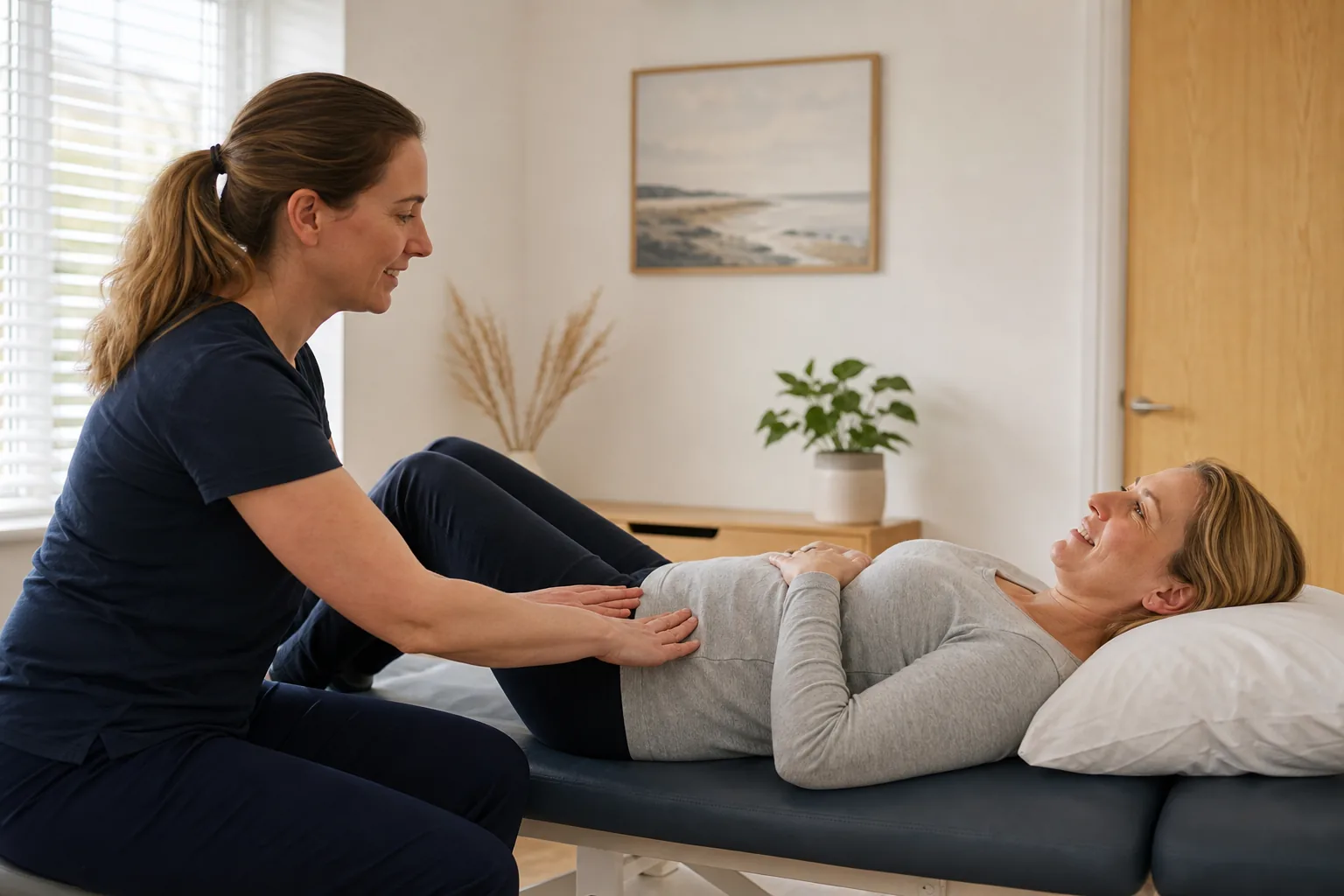
Pro Tip:
Your pelvic floor and core don’t work in isolation – a good recovery plan always looks at the whole body, not just one muscle group.
5. Rehabilitation: The Mummy MOT Recovery Plan
Every woman’s plan is unique, but most will include:
5.1 Pelvic Floor Rehab
- Targeted strengthening exercises.
- Relaxation techniques if muscles are overactive.
- Pelvic floor release is required.
5.2 Core & Diastasis Recti Healing
- Gentle deep core activation before lifting and exertion.
- Gradual progression to dynamic exercises.
- Avoiding high-impact moves too soon, especially if breastfeeding.
5.3 Posture & Movement Re-Education
- Ergonomic tips for lifting baby and pram.
- Stretches for chest, back, and hips.
- Strengthening weak postural muscles.
5.4 C-Section Scar Therapy
- Scar massage to prevent adhesions.
- Mobilisation techniques to restore movement.
Mini-Guide:
Top 5 Pelvic Floor Mistakes New Mums Make
- Doing only “squeeze and hold” without full relaxation.
- Forgetting to breathe during exercises.
- Doing too many, too soon.
- Avoiding exercise completely or trying to run too soon.
- Not seeking professional guidance when symptoms persist.
6. How Soon Can I Have The Mummy MOT?
You can book from 6-8 weeks postpartum but it’s never too late. Many mums come 1, 2, or even 3 years after giving birth and still see significant improvement.

7. Real-Life Stories
Case Study – “Sarah, 18 months postpartum”
Sarah loved running but hadn’t been able to since her son was born due to leaking and hip pain. After her Mummy MOT identified pelvic floor weakness and glute under-activation, her rehab plan got her back to running pain-free within 12 weeks.
Case Study – “Amira, 3 years postpartum”
Amira thought her diastasis recti was “just how her tummy looked now.” A Mummy MOT assessment showed the gap could still be reduced. Within 4 months, her core was stronger, her back pain gone, and her self-confidence transformed.
8. When to Seek Further Help
If you notice:
- Sudden heaviness in the pelvic area.
- Unexplained bleeding.
- Severe or worsening pain.
- Loss of bladder or bowel control.
…seek urgent medical advice. Your Mummy MOT practitioner can also refer you to appropriate specialists.
9. Finding a Qualified Practitioner
Look For:
- Certified Mummy MOT Practitioner status.
- Chartered Physiotherapist registration.
- Specialisation in women’s health physiotherapy.
- Positive client reviews.
10. Your Most Common Questions Answered
Q: Is The Mummy MOT® painful?
A: No – the assessment is gentle and always done at your pace. Internal pelvic floor checks are only carried out with your consent, and your comfort is the priority throughout.
Q: Can I still have The Mummy MOT® years after giving birth?
A: Absolutely. Many women seek a postnatal physiotherapy assessment several years after having their last child and still see significant improvements in pelvic floor function, abdominal strength, and posture.
Q: Will I need more than one appointment?
A: Often, yes. While the initial Mummy MOT gives you a detailed plan, follow-up sessions ensure your recovery stays on track and exercises are progressed safely.
Q: Is The Mummy MOT® only for vaginal births?
A: No – it’s equally important after a C-section. Scar management, core recovery, and pelvic floor health are relevant for all births.
Q: Can I exercise normally straight after my Mummy MOT®?
A: That depends on your results. If your pelvic floor and core are functioning well, you may be able to return to more vigorous exercise quickly. If not, your physio will give you a staged plan.
Q: How much does The Mummy MOT® cost?
A: Prices vary, but in the UK it’s typically £90–£150 for the initial 1-1.5 hour-long assessment. Always check your practitioner’s credentials before booking.
Q: Is The Mummy MOT® covered by health insurance?
A: Some insurers cover women’s health physiotherapy assessments – contact your provider to confirm
Q: What’s the difference between The Mummy MOT® and regular physiotherapy?
A: The Mummy MOT is a structured, certified postnatal assessment that specifically addresses the unique changes and challenges after pregnancy and birth. Not all physios offer it, so look for the Mummy MOT certification..
Conclusion: You Deserve to Feel Like You Again
Motherhood is demanding – physically and emotionally – and it’s easy to put your needs last. But your recovery is not a luxury; it’s a necessity.
The Mummy MOT is a powerful step towards reclaiming your strength, confidence, and comfort – whether you’re 6 weeks or 3 years post-birth.
You May Also Like...

Cranial Sacral Therapy: A Gentle, Whole-Body Approach to Healing and Reconnection
Cranial Sacral Therapy: A Gentle, Whole-Body Approach to Healing and Reconnection When Something Feels Off… But You Can’t Quite Explain Why Have you ever felt like your body just isn’t quite right… but you can’t put your finger on why? You might feel tense but not...
Havening: A Complete Guide to Gentle, Science-Backed Emotional Healing
Havening: A Complete Guide to Gentle, Science-Backed Emotional Healing Havening Therapy for When You’re Holding It All Together… But Inside You Feel Overwhelmed If you’ve found yourself searching for Havening, you’re probably not just curious. You might be feeling...

Physiotherapy: The Ultimate Guide to Musculoskeletal (MSK) Physiotherapy
Physiotherapy: The Ultimate Guide to Musculoskeletal (MSK) Physiotherapy You’ve probably noticed it creeping in gradually — the ache in your lower back after a long day at your desk, the stiffness in your knees when you stand up from the car, or the shoulder pain that...
0 Comments